
Professional gym cleaning handles the deep work: the nightly disinfection of equipment, the scrubbing of change rooms, the treatment of high-risk surfaces with clinical-grade products. But the health of a gym environment is not determined solely by what happens after closing time. It is shaped, throughout every session, by the habits of every member who uses the space.
Whether you train at a large commercial gym, a boutique studio, or a workplace fitness centre, understanding what actually poses a risk and how to manage it during your workout makes a real difference to your own health and to the cleanliness experience of everyone who trains alongside you. Here are the practical habits that matter. And for gym operators, Royce Cleaning’s professional gym cleaning service provides the deep-clean baseline that makes member habits meaningfully effective.
|
Professional Gym Cleaning in Sydney Royce Cleaning provides deep cleaning and disinfection services for gyms and health clubs across Sydney and NSW. Trusted since 1996. |
What Actually Lives on Gym Equipment
Before the hacks, a quick picture of what gym equipment accumulates between professional cleans. Studies have identified various bacteria on gym surfaces including Staphylococcus aureus, E. coli, and skin fungi including the dermatophytes responsible for tinea (athlete’s foot) and ringworm. Gym mats, free weights, and cardio equipment handles are consistently among the highest-contamination surfaces in any gym.
This is not a reason to avoid the gym. It is a reason to understand the risk profile of different pieces of equipment and to build habits that address those risks specifically.
| 💡 Highest risk surfaces: Free weights (dumbbells and barbells) and resistance machine handles are among the highest bacterial-load surfaces in most gyms because they are touched by many people and are often not wiped between uses. Gym mats carry fungal risk, particularly for skin contact during floor exercises. Cardio machine handles and touchscreens are high-touch, high-contamination contact points. |
Before Your Workout: The Preparation Habits
Bring your own towel, always
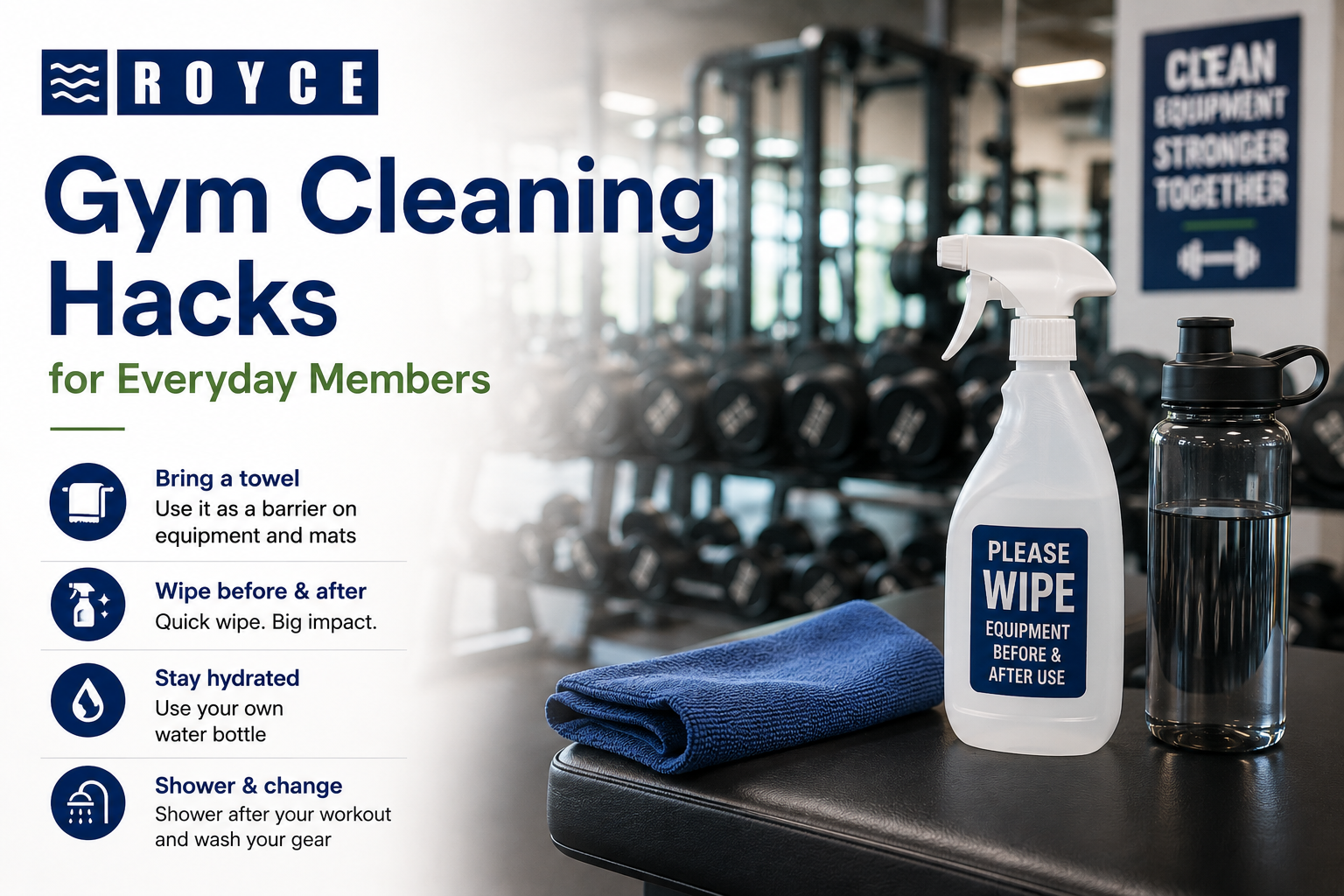
A personal gym towel used as a barrier between your skin and shared surfaces is one of the most effective hygiene habits a gym member can have. Use it under your back during bench exercises, on machine seats and pads, and on mat surfaces during floor work. A dedicated gym towel that is washed after every session keeps bacteria off your skin and off the shared surfaces you use.
Check the wipe station locations
Most well-run gyms provide sanitising wipes or spray-and-wipe stations throughout the floor. Take thirty seconds at the start of your session to identify where the nearest station is to the equipment you plan to use. Knowing where to go means you are more likely to actually wipe equipment consistently rather than skipping it when it is inconvenient.
Wear appropriate footwear at all times
Bare feet on gym floors, in change rooms, and in showers is the primary transmission route for tinea and plantar warts. Footwear should be worn from the point you enter the change room to the moment you step into your own shower at home. Thongs worn in shared showers and change rooms provide meaningful protection. Socks alone do not.
During Your Workout: The Core Habits
Wipe equipment before and after use
The gym etiquette standard is to wipe equipment after you use it. From a hygiene perspective, wiping before is equally important: you cannot control whether the person before you wiped thoroughly. Before-and-after wiping is twice as effective as after-only wiping and takes the same amount of time.
For effective surface disinfection, the wipe needs contact time: spray the surface, let the product sit for the contact time specified on the dispenser (usually 30 seconds to one minute), then wipe. Spraying and immediately wiping does not allow disinfectants enough time to work.
Do not touch your face during a workout
The eyes, nose, and mouth are the primary entry points for pathogens picked up from surfaces. During a workout, hands repeatedly touch equipment, weights, and bars before returning to wipe sweat from the face. This is the most direct route for gym-surface bacteria and viruses to enter the body. Keeping a small personal towel specifically for face use, and avoiding touching the face with hands that have just contacted equipment, significantly reduces this risk.
Use your own water bottle
Shared water dispensers and fountain-style taps have higher contamination potential than the gym surfaces, because many people contact the spout or button with their mouth and hands. Bring a fully sealed personal water bottle, refill at the dispenser without letting the spout contact the tap, and do not share bottles with other members.
Be mindful with free weights and barbells
Free weights are among the most-handled and least-wiped pieces of equipment in most gyms. When using dumbbells and barbells, consider wearing weightlifting gloves or chalk, which reduces direct skin-to-surface contact. Wash hands immediately after a free weight session before touching your face or any other body surface.
After Your Workout: The Habits That Protect You
Change out of gym clothes promptly
Gym clothing saturated with sweat creates a warm, moist environment that promotes bacterial growth against the skin. Showering and changing as soon as possible after a session reduces the risk of skin infections including folliculitis, tinea, and related conditions.
Shower before using shared spa or pool facilities
Where gyms include spa, sauna, or pool facilities, showering before entering is basic hygiene practice and in most facilities a condition of use. It reduces the transfer of sweat, bacteria, and topical products into shared water facilities.
Wash gym gear after every session
Leaving gym clothing in a bag between sessions allows bacteria to multiply in the damp, warm fabric. Washing after every session, including socks, towels, and gloves, keeps contamination from reintroducing itself to your skin at the next session.
The Member’s Role in the Gym’s Overall Cleanliness
Professional cleaning services handle what members cannot: overnight disinfection, chemical-grade surface treatment, and systematic deep cleaning of facilities. Royce Cleaning’s gym cleaning service provides this professional baseline. But the cleanliness of a gym between professional cleans is shaped by the collective habits of its members.
A gym where members consistently wipe equipment, use barriers when appropriate, and follow basic hygiene practices maintains a meaningfully lower microbial load than one where these habits are not observed, regardless of the quality of the overnight clean. Both the professional clean and the member habits are necessary. Neither is sufficient on its own.
|
Professional Gym Cleaning That Members Can Trust Royce Cleaning provides deep-clean disinfection services for fitness centres, studios, and health clubs across Sydney and NSW. |
Frequently Asked Questions
How often should a commercial gym be professionally cleaned?
The professional cleaning frequency for a commercial gym depends on its size, membership numbers, and hours of operation. Most commercial gyms require daily professional cleaning of bathrooms, change rooms, and high-touch surfaces, with regular deep cleaning of all equipment and floor surfaces. Royce Cleaning’s gym cleaning service can be scheduled to align with your facility’s operational hours and cleaning needs.
Are gym sanitising wipes effective against all bacteria and viruses?
The effectiveness of gym sanitising wipes depends on the specific product formulation, the contact time applied, and whether the surface was pre-cleaned of visible soil. Most commercial gym wipes are effective against common bacteria and some viruses when used correctly: apply to the surface, allow the specified contact time, and do not wipe immediately. For surfaces with visible sweat or soil, a two-step clean (remove physical soil first, then disinfect) is more effective than a single-step wipe.
What is the biggest hygiene mistake gym members make?
The most common and consequential hygiene mistake is using shared towels or gym towels across multiple sessions without washing between uses. A gym towel that picks up bacteria at Monday’s session and is used again on Wednesday without washing can reintroduce those bacteria to the skin. Personal hygiene items, including towels, should be washed after every individual session.