
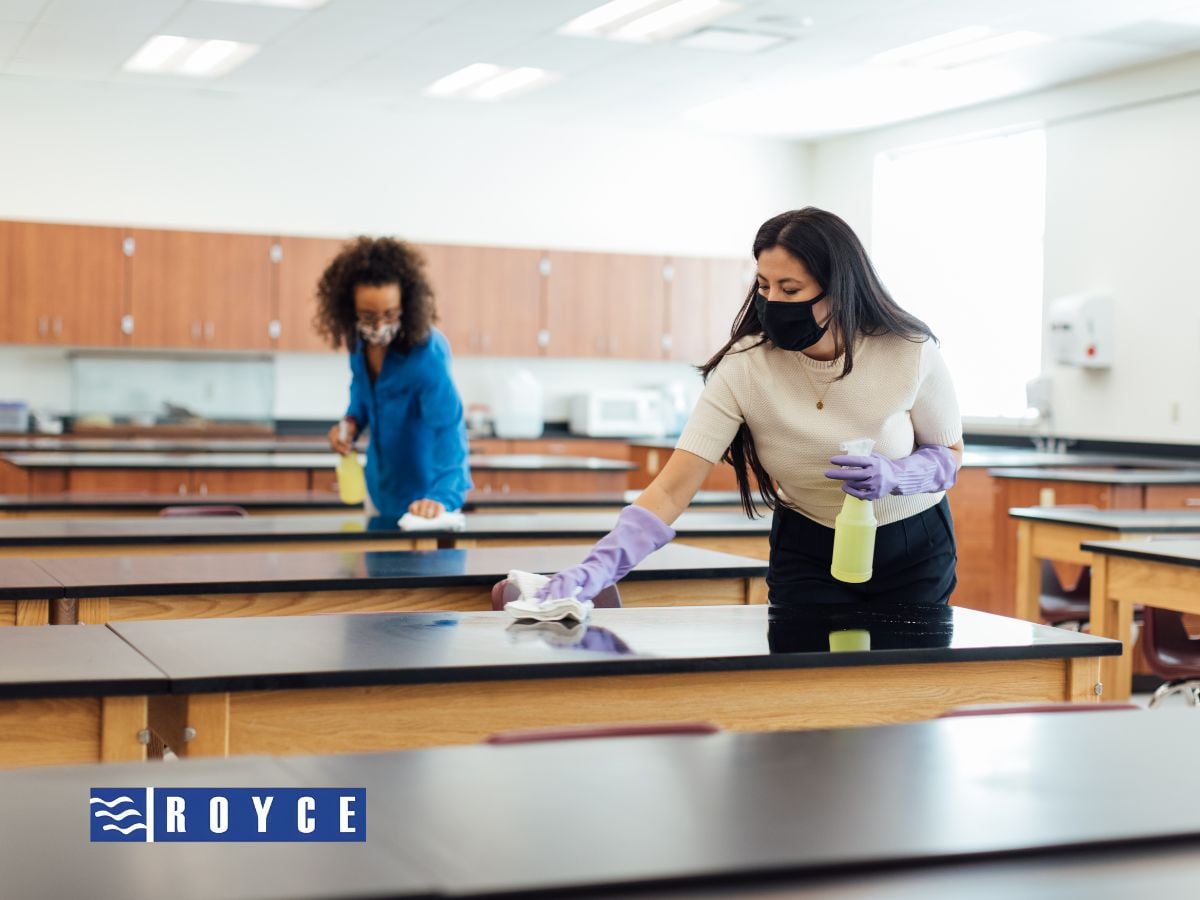
Every school principal, facilities manager, and parent knows what illness season looks like: a classroom where half the students are absent, supply teachers covering for unwell staff, and the inevitable spread from school to home and back again. It is one of the recurring operational and welfare challenges that Australian schools face, and while no cleaning program can eliminate illness transmission entirely, a well-designed cleaning routine can meaningfully reduce its scale.
The evidence consistently supports the connection between environmental hygiene and illness transmission in communal environments like schools. Hand hygiene programs, high-touch surface disinfection, and adequate ventilation have each been associated with reductions in the transmission of respiratory and gastrointestinal illnesses in school populations. Royce Cleaning’s school cleaning service is designed with this public health dimension in mind, applying cleaning routines that focus on the pathogen pathways most associated with illness transmission.
| Professional School Cleaning with Royce Cleaning Verified, eco-friendly school cleaning with a 100% satisfaction guarantee. Sydney-wide. Call 02 9897 2099 for a free quote. Get a Free School Cleaning Quote |
Why School Environments Are High-Risk for Illness Transmission
Schools are one of the most challenging environments for infection control for several structural reasons:
- High density of people in enclosed spaces: classrooms bring 25 to 35 students into a relatively small space for extended periods, creating conditions where airborne and contact transmission of pathogens is much more likely than in lower-density environments
- Age group vulnerability and hygiene compliance: younger children in particular have less consistent hand hygiene behaviour than adults, and the physical closeness of play and interaction creates more frequent hand-to-face contact, which is a primary transmission route for respiratory and gastrointestinal illnesses
- Shared high-touch surfaces: doorknobs, light switches, handrails, desks, keyboards, tablet devices, drinking fountains, and bathroom fixtures are all touched by large numbers of people in rapid succession throughout the school day
- Limited natural ventilation in many classrooms: classrooms that rely on air conditioning without adequate fresh air exchange can accumulate airborne particulates and pathogens over the course of the day
The Cleaning Routines That Make the Biggest Difference
Routine 1: High-touch surface disinfection
Of all the cleaning routines available to a school, high-touch surface disinfection has the clearest and most direct relationship with reducing the transmission of pathogens via the contact route. High-touch surfaces are those that are touched by many different people throughout the day, each of whom may deposit and then pick up pathogens from the surface.
The high-touch surfaces requiring most frequent attention in a school environment are:
- Door handles and push plates on all classroom, bathroom, library, and administration entry points
- Light switches throughout the building
- Bathroom taps, basin surrounds, flush buttons, and toilet flush handles
- Shared classroom equipment: keyboards, mice, tablet devices, remote controls, and interactive whiteboard pens
- Stair handrails and lift buttons where present
- Drinking fountain activation points
- Canteen counter and payment surfaces
Best practice is for high-touch surface disinfection to occur at minimum twice daily: once before the school day begins and once at the end of the school day. During peak illness seasons (winter months and periods when respiratory viruses are circulating in the community), a midday disinfection of the highest-frequency surfaces (bathroom fixtures, main door handles) provides additional protection.
| 💡 Product selection matters for high-touch surface disinfection: Not all surface cleaning products disinfect. A product that cleans but does not disinfect removes visible soil but does not reliably inactivate viruses and bacteria. Look for products with a confirmed therapeutic goods administration (TGA) listing as a disinfectant for the target pathogen types, and confirm that the dwell time required is being observed. Wiping a disinfectant off immediately after application removes it before it has worked. |
Routine 2: Bathroom hygiene
School bathrooms are one of the primary transmission points for gastrointestinal illness, particularly norovirus and rotavirus, which are transmitted through the faecal-oral route and can survive on hard surfaces for extended periods.
A bathroom hygiene routine that meaningfully reduces transmission includes:
- Cleaning and disinfecting all toilet seats, bowls, flush handles, and cisterns at minimum twice daily
- Cleaning and disinfecting all taps and basin surrounds at minimum twice daily
- Ensuring continuous availability of liquid hand soap at all basins throughout the school day (not just morning replenishment)
- Ensuring continuous availability of paper towels or functioning hand dryers: hand drying is the completion of effective hand washing and students who cannot dry their hands properly are more likely to touch their face or surfaces with wet hands
- Mopping bathroom floors with a hospital-grade disinfectant solution at minimum twice daily
- Checking bathroom conditions and replenishing supplies at a scheduled midday check, not just at the start and end of day
Routine 3: Classroom cleaning with attention to shared surfaces
End-of-day classroom cleaning is standard in most schools. The routines that make classroom cleaning more effective for illness prevention are those that go beyond visible surface cleaning to address the pathogen-bearing surfaces that standard cleaning sometimes misses.
- Wipe all desk and table surfaces, including the sides and any undersurface ledges that students touch
- Disinfect all shared technology equipment: keyboards, mice, tablets, styluses, and interactive display touchscreens
- Clean and disinfect any pencil pots, shared stationery containers, or communal equipment holders
- Wipe all chairs including chair backs and armrests
- Empty and disinfect bins
- Vacuum or damp mop the floor depending on the floor type
- Mop any spill areas with appropriate solution
Routine 4: Library, canteen, and common area focus
Beyond classrooms and bathrooms, the library, canteen, and circulation areas carry their own high-touch transmission risks in a school environment.
- Wipe library tables and chair surfaces as part of the daily cleaning routine. Library books and materials are high-touch items that cannot practically be disinfected but regular hand washing before and after library access reduces the risk
- Canteen food preparation surfaces must be cleaned and sanitised between food groups and at the end of each service. Food contact surface sanitisation is a food safety requirement, not only a hygiene preference
- Wipe the top surfaces of lockers and cubby areas, which accumulate contact with multiple students’ hands daily
- Clean and disinfect all seating in common areas, canteen, and assembly spaces
Seasonal Adjustments: When to Lift the Intensity
The standard daily and weekly cleaning routine provides a baseline level of protection. Lifting the intensity of the cleaning program during known high-risk periods is a practical and effective measure:
- During winter and early autumn, when respiratory illnesses typically peak, move to three-times-daily bathroom cleaning and add a midday high-touch surface disinfection pass
- During or immediately after a documented gastroenteritis outbreak, increase bathroom cleaning frequency and expand the disinfection coverage to all classroom contact surfaces for the outbreak period
- When a notifiable illness (such as influenza or COVID-19) has been confirmed in the school community, follow the relevant public health authority guidance for enhanced cleaning protocols
Staff Attendance and Teacher Wellbeing
The absenteeism link in school cleaning is not only about students. Staff absence due to illness has its own operational impact: the need for relief teachers, disruption to classroom programs, and the additional workload placed on remaining staff. A cleaning routine that reduces illness transmission in the student population also reduces transmission to teaching and administrative staff.
A well-cleaned school is a healthier school for everyone in it. Royce Cleaning’s school cleaning service uses eco-friendly cleaning products, employs verified and background-checked staff, and provides a 100% satisfaction guarantee on all school cleaning services across Sydney and New South Wales.
| Healthier Schools with Royce Cleaning Eco-friendly. Background-checked. 100% satisfaction guarantee. School cleaning across Sydney. Call 02 9897 2099. Request a Free School Cleaning Quote |
Frequently Asked Questions
How often should school bathrooms be cleaned during the day?
Best practice for school bathrooms during a normal school day is a minimum of twice: a full clean before school opens and a full clean at the end of the day, with a midday check and replenishment of supplies. During illness outbreaks or peak illness season, three cleans per day with attention to bathroom fixtures in between scheduled cleans is recommended by public health guidelines. Royce Cleaning’s school cleaning team can design a bathroom cleaning schedule appropriate to your school’s enrolment size and facility layout.
Should schools use standard cleaning products or specific disinfectants?
For general surface cleaning (removing visible soil), standard commercial cleaning products are appropriate. For high-touch surface disinfection and bathroom sanitation, products should have confirmed disinfectant activity against the relevant pathogens. In practice, this means using a product with a TGA listing as a disinfectant rather than simply a detergent or surface spray. Royce Cleaning uses eco-friendly professional cleaning products that are appropriate for school environments, including products safe for use around children.
Can better cleaning alone eliminate illness outbreaks in schools?
No single intervention eliminates illness transmission in a school environment. Effective school hygiene is a combination of environmental cleaning (surface disinfection, bathroom hygiene), hand hygiene programs (soap availability, hand washing reminders, hand sanitiser access), adequate ventilation, and supporting unwell students and staff to stay home rather than attend. Environmental cleaning removes or inactivates pathogens on surfaces, which significantly reduces one transmission route, but does not address airborne transmission or person-to-person contact. The evidence consistently supports cleaning as a meaningful contributor to reduced illness transmission, not a complete solution in isolation.