
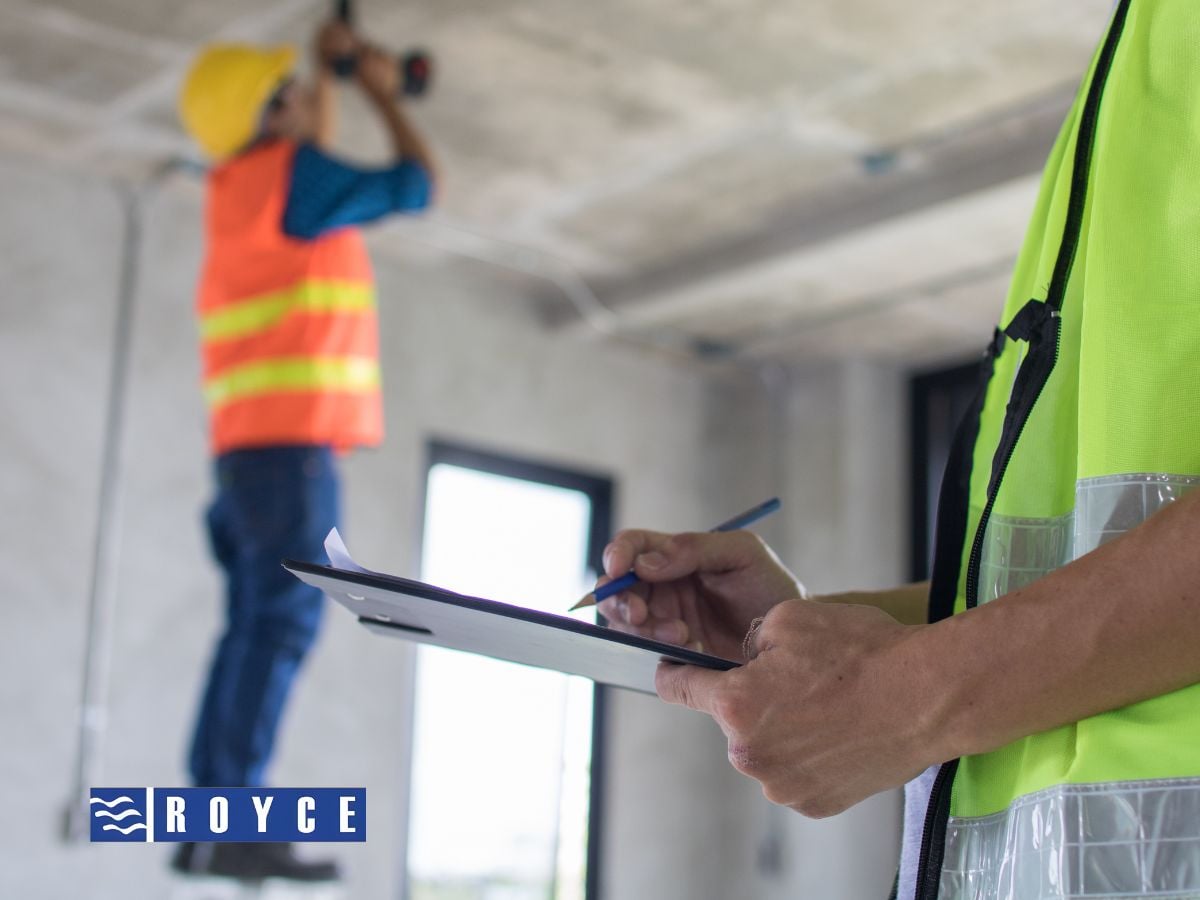
Cleaning an industrial workspace is not the same as cleaning an office. The hazards are different in kind and magnitude: chemical exposure, work at height, heavy moving equipment, confined spaces, high-noise environments, electrical risks, and the particular hazards of cleaning around active production or storage operations. An industrial cleaner who enters a warehouse, factory, or processing facility without understanding these hazards, or without the right PPE and procedures in place, is exposed to real and serious risk.
Royce Cleaning’s industrial cleaning teams and warehouse cleaning teams work to WHS-compliant procedures on every site. This checklist is designed for facility managers, HSE coordinators, and cleaning supervisors who want to review and strengthen the safety framework around cleaning activities in their industrial workspace.
| Industrial Cleaning Done Safely by Royce Cleaning Royce Cleaning provides WHS-compliant industrial and warehouse cleaning in Sydney. ISO 9001 certified. Call 02 9897 2099. Get a Free Industrial Cleaning Quote |
Section 1: Pre-Shift Safety Preparation
Every industrial cleaning shift should begin with a pre-shift safety preparation phase before any cleaning activity commences.
Hazard identification and site assessment
- Conduct a walk-through of the cleaning zone before beginning work to identify any new or changed hazards from the previous shift
- Confirm which areas of the facility are active (people present, machines operating, forklifts in use) and adjust the cleaning sequence to start in inactive zones
- Check for any spills, leaks, or hazardous material incidents that have occurred since the last cleaning shift and confirm the correct procedure for each
- Review any permit to work, isolation certificates, or operational restrictions that apply to the cleaning zone on this shift
PPE check
- Confirm appropriate PPE is available and in good condition for all cleaning staff: safety footwear (steel-capped, slip-resistant), high-visibility vest, safety glasses or goggles (where chemical or physical splash risk exists), heavy-duty chemical-resistant gloves, ear protection (where noise levels exceed 85 dB), and dust masks or respirators (P2 rating as a minimum for dusty environments)
- Check that PPE is correctly fitted before entering the cleaning zone
- Confirm that any PPE that shows signs of wear, damage, or degradation is replaced before the shift begins
Equipment check
- Inspect all cleaning equipment before use: floor scrubbers, industrial vacuums, pressure washers, wet vacuums, and hand tools
- Check electrical equipment for visible damage to cords, plugs, and housings. Tag and remove from service any equipment that is damaged
- Confirm that all cleaning machines are charged or fuelled appropriately for the planned shift
Section 2: Chemical Safety
Chemical cleaning products represent one of the highest-risk elements of industrial cleaning. The following checklist items address chemical safety across storage, handling, application, and disposal.
Storage and SDS compliance
- Confirm that all cleaning chemicals on site are stored in the original labelled container or a correctly labelled secondary container
- Check that Safety Data Sheets (SDS) are available and current for all chemicals used in the cleaning program. SDS must be readily accessible to cleaning staff at all times
- Confirm that incompatible chemicals (for example, acids and bases, oxidisers and flammables) are stored separately in compliance with the relevant Australian Standards for chemical storage
- Check that the chemical storage area is ventilated, locked where required, and free of sources of ignition if flammable products are stored
Dilution and handling
- Confirm that all chemical dilution is performed by trained personnel using calibrated dispensing equipment, not by estimation
- Check that chemical dispensing occurs in a ventilated area away from food preparation, occupied workspaces, and ignition sources
- Confirm that cleaning staff know the first aid and spill response procedures for each chemical they are using before commencing work
Waste disposal
- Confirm that chemical waste, spent cleaning solutions, and contaminated rinsate are disposed of in compliance with the Environmental Protection Act requirements for the chemical involved
- Check that any chemical spill kits are in place and appropriately stocked in the cleaning zone
Section 3: Floor and Surface Safety
Industrial floors are one of the highest-risk surfaces in any workspace. Cleaning industrial floors introduces additional slip and fall hazards that must be actively managed.
- Position wet floor signage before any floor cleaning activity begins and maintain signage until the floor is completely dry and safe
- Sequence floor cleaning to maintain a dry egress route at all times: never block all exits in a zone with wet floor simultaneously
- For floor scrubber operations, check that the machine’s squeegee assembly is functioning correctly and that the machine is recovering liquid effectively
- For pressure washing activities, confirm that the working area is isolated from pedestrian and vehicle traffic during operation
- Confirm that drains in the cleaning zone are open and functioning to prevent ponding water
- For high-gloss or polished concrete floors, confirm that the correct mop head type and dilution rate are used: incorrect products can strip floor coatings and create a slip hazard
| ✦ Industrial floor cleaning and forklift operation: Cleaning industrial floors while forklift operations are active in the same zone is a serious safety risk. Cleaning activities that wet the floor surface or position cleaning equipment in forklift travel paths must be coordinated with the site’s materials handling schedule. The cleanest outcome is to clean industrial travel lanes at the end of the shift or during planned downtime, not concurrently with active forklift traffic. |
Section 4: Work at Height
Cleaning at height in an industrial setting, including cleaning high racking, light fittings, ductwork, mezzanine floors, and elevated storage areas, introduces the specific hazards of fall risk.
- Confirm that all work at height above two metres follows a safe work method statement specific to the height work task
- Inspect all ladders, mobile scaffolding, or elevated work platforms before use and check for structural damage, secure footing, and appropriate weight rating
- Confirm that ladders are placed on firm, level surfaces and that the three-point-of-contact rule is briefed and followed
- For elevated work platforms (scissor lifts, boom lifts), confirm that operators hold the appropriate competency and that the machine has been pre-start inspected
- Confirm that the area below any height work is barricaded to prevent objects falling onto people below
- Never carry cleaning equipment up a ladder: use a properly designed carrying harness, bag, or supply line
Section 5: Confined Spaces
Some industrial cleaning tasks involve confined spaces: tanks, pits, vessels, ducts, and other enclosed or restricted spaces where the atmosphere may be oxygen-deficient, toxic, or flammable.
- Confirm that any confined space cleaning follows a confined space entry permit process under the Work Health and Safety Regulation 2017 (NSW)
- Atmospheric testing for oxygen levels, flammable gases, and toxic substances must be performed before entry and continuously during the task
- A standby person must be in attendance at all times when workers are in a confined space
- Emergency retrieval equipment must be in place before any confined space entry
| 💡 Engage a licensed industrial cleaning specialist for confined spaces: Confined space cleaning is high-risk work that requires specific training, procedures, and equipment. It is not appropriate for general cleaning staff without confined space entry training. Royce Cleaning’s industrial cleaning teams are trained to WHS standards for the specific hazards of each industrial site type. |
Section 6: End-of-Shift Procedures
- Secure all chemical containers and return cleaning products to the designated storage location
- Inspect and clean all cleaning equipment before storage. Dirty equipment is a contamination risk and a deterioration risk
- Complete and submit any required cleaning records, incident logs, or WHS observation forms for the shift
- Report any hazards, near-misses, or changed site conditions observed during the shift to the supervising manager
- Confirm that all wet floor signage is removed and that all cleaned areas are safe for normal use before leaving the site
| Safe Industrial Cleaning by Royce Cleaning Sydney 25+ years. ISO 9001 certified. WHS-compliant industrial and warehouse cleaning across NSW. Call 02 9897 2099. Book a Free Inspection |
Frequently Asked Questions
What WHS regulations apply to industrial cleaning in NSW?
Industrial cleaning in NSW is primarily governed by the Work Health and Safety Act 2011 (NSW) and the Work Health and Safety Regulation 2017 (NSW). Specific duties apply to persons conducting a business or undertaking (PCBUs) to ensure the health and safety of workers, including cleaning workers. For specific high-risk activities (confined space entry, work at height), the WHS Regulation sets out mandatory procedures. Safe Work Australia provides national codes of practice for many of these activities. Refer to SafeWork NSW at safework.nsw.gov.au for current guidance specific to your industry. Royce Cleaning operates to WHS-compliant procedures on all industrial and warehouse sites.
Does a cleaning contractor need their own WHS documentation, or does the site’s WHS plan cover them?
Both. The site PCBU has a primary duty of care that includes consulting with contractors about WHS matters, providing relevant site safety information, and ensuring that the site conditions are safe. The cleaning contractor has their own duty of care as a PCBU for their own workers, which requires them to have their own WHS documentation including a Safe Work Method Statement (SWMS) for any high-risk construction work and appropriate procedures for chemical handling and other identified risks. The two sets of obligations exist in parallel, not as alternatives.