
Church cleaning is most effective when it follows the church calendar rather than an ordinary weekly roster. A church usually combines a worship space with halls, meeting rooms, kitchens, toilets, offices and grounds, and the busiest times are predictable: weekend services, weddings, funerals, and the major festivals of the year. A good program does the routine clean before the main services, resets the building after events, and schedules periodical work such as carpet cleaning, high dusting, light fittings and windows in quieter weeks. Many churches are older buildings with timber, stone, brass and textiles that need gentle methods, and sacred objects that should only be handled in ways the parish or congregation has agreed.
This guide is for parish administrators, church wardens, property committees, ministers and volunteers who look after a church building in Sydney. With Christmas approaching, it is also a good time to plan the deep clean before the busiest services of the year.
What should a church cleaning schedule cover?
A church is several different kinds of space under one roof, and each needs its own routine.
The worship space
The nave and sanctuary are the heart of the building and the place where cleanliness is most noticed. Routine cleaning covers floors, carpet runners and aisles, pews or chairs, window sills, ledges, lecterns and the entry. Pews deserve their own attention because they are touched by everyone and are often old timber; our guide to how to clean church pews properly covers the detail.
The sanctuary and altar
The sanctuary and altar area should be cleaned only in the way the parish or congregation has agreed. In many churches, particular items are cared for by clergy, sacristans or altar guilds, and the cleaner’s role is limited to floors and specific surfaces. That should be written down, not assumed.
Entries, foyers and narthex
The entry is where people gather before and after services, and where grit and water come in on shoes. Clean glass doors, clear floors and effective matting matter here, particularly in wet weather.
Halls, meeting rooms and kitchens
Church halls are often the busiest part of the building during the week, used for youth groups, playgroups, meetings, community meals and hire by outside groups. They need cleaning around that schedule, and kitchens used for morning teas, community meals or catering need the same attention to benches, appliances, floors and bins as any shared kitchen.
Toilets
Church toilets see heavy use on Sundays and at large events, then little use during the week. They need to be cleaned, stocked and checked before peak times. Supply and servicing of soap, paper towel and sanitary disposal units can be handled through a hygiene services arrangement.
Offices and parish rooms
Administration areas need routine office cleaning: desks, bins, kitchenettes and floors.
Grounds
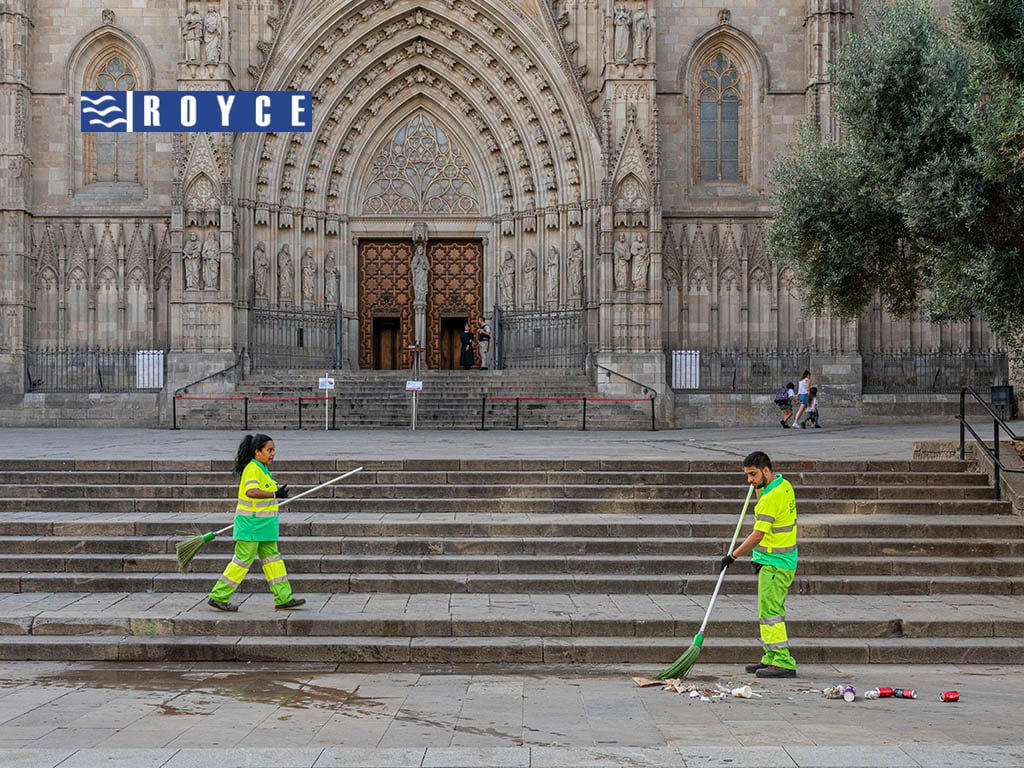
Paths, steps, gardens and car parks are the first thing people see when they arrive. Regular lawn mowing and garden care keeps the grounds presentable, and clearing leaves and debris from paths and steps reduces slip hazards.
How should church cleaning fit around services, weddings and funerals?
The church calendar makes cleaning predictable, which is an advantage. A schedule built around it typically looks like this:
- Before the main weekend services: worship space, entry, toilets and any hall used for morning tea.
- After major services and events: a reset of the worship space, toilets, hall and kitchen.
- Before weddings and funerals: a check and touch-up of the worship space, entry and toilets, often at short notice for funerals.
- During the week: halls and meeting rooms around their bookings, offices, and periodical work in quiet periods.
Christmas and Easter are the peak points of the year. Attendance is higher, services are more frequent, and the building is often decorated. A deep clean in the weeks before Christmas, covering carpets, high dusting, light fittings, windows and the hall, means the building is ready before the busiest period begins. Booking that work early matters, because many organisations want the same window.
What does a pre-Christmas church deep clean include?
A deep clean before Christmas is different from the weekly clean. It reaches the places the routine program does not, so the building is at its most presentable when attendance is highest. A typical scope includes:
- Carpets and runners: hot water extraction of aisles, sanctuary carpet and hall carpet, with spot treatment of stains and candle wax.
- Hard floors: machine scrubbing, and periodical floor maintenance where the floor has a protective finish.
- Pews and chairs: a thorough clean of seats, backs, book racks and kneelers, and the floor underneath.
- High dusting: ceilings, beams, cornices, ledges, window sills and the tops of screens and organ cases where reachable without touching the instrument.
- Light fittings and chandeliers: dusted and cleaned, so the building is brighter for evening services.
- Glass: entry doors, internal glass and accessible windows.
- Halls and kitchens: a deep clean of appliances, cupboards, benches and floors before the end-of-year functions.
- Toilets: a full clean including walls, partitions and fittings, and a check of consumable supplies for the busy weeks.
- Grounds: mowing, edging, clearing paths and steps, and tidying garden beds before the first Christmas service.
Decorations are easier to put up in a clean building than to clean around, so it helps to schedule the deep clean before the Christmas decorations go in, and a lighter touch-up once they are in place. A similar but usually smaller clean works well before Easter.
How do you clean older church interiors without damaging them?
Many Sydney churches are older buildings, and some are heritage listed. Their materials have often lasted a long time precisely because they have been cared for gently. Cleaning should follow the same principle: use the mildest method that works.
- Timber in pews, panelling, doors and floors can be damaged by too much water and harsh chemicals. Damp rather than wet cleaning, and products suited to the existing finish, are the safe approach.
- Stone and sandstone can be marked or eroded by acidic cleaners and aggressive methods. Test any cleaning method on a small, inconspicuous area first.
- Brass and other metals in fittings, plaques and candlesticks should be cleaned with products suited to the metal, and only where the parish has agreed the cleaner will handle them.
- Stained and leadlight glass is fragile, and its repair and conservation is specialist work. Routine cleaning should be limited to gentle dusting unless a specialist has advised otherwise.
- Textiles, including altar frontals, banners and vestments, are usually cared for by the parish rather than the cleaner.
- Candle wax and soot build up on floors, carpets, walls and ceilings over time. Wax should be removed carefully without spreading it, and soot on high surfaces is a periodical job.
If your church is heritage listed, check with your local council or a heritage adviser before undertaking anything beyond routine cleaning, such as stone cleaning, treatment of original surfaces or work on significant fabric.
How are high ceilings, chandeliers and windows cleaned safely?
Church interiors often have high ceilings, suspended light fittings, chandeliers and high windows that cannot be reached from the floor. Dust and cobwebs collect on them, and over time they make the whole space look dimmer and older than it is.
This is work at height, and it needs to be planned. The Work Health and Safety Regulation 2025 (NSW) requires the risk of falls to be managed, and work to be done from the ground or a solid construction wherever reasonably practicable. In practice, that means using extension tools from the floor where possible, and appropriate access equipment, used by trained people, where it is not. Royce’s church cleaning service includes the cleaning of high ceilings, chandeliers and intricate architectural details.
Older buildings also raise the question of asbestos. Under section 425 of the Work Health and Safety Regulation 2025 (NSW), a person with management or control of a workplace must ensure an asbestos register is prepared and kept, unless the building was constructed after 31 December 2003 and no asbestos has been identified or is likely to be present. The register must be available to anyone carrying out work there. Before any periodical or high-level work begins in an older church building, the cleaning contractor should be shown the register, so that materials such as old ceiling linings or floor tiles are not disturbed.
Who should handle sacred objects and church furnishings?
This is the question most worth settling before any cleaner starts. A simple written agreement avoids misunderstandings and protects items that matter deeply to the congregation. It should cover:
- which items the cleaner may clean, and how,
- which items the cleaner must not move or touch,
- which areas are cleaned only by clergy or designated parishioners,
- how furniture such as lecterns, fonts and chairs should be returned after floor cleaning,
- who to contact if something appears damaged or out of place.
Royce’s approach to church cleaning is to handle religious objects gently, with care to preserve them and prevent damage. Agreeing the boundaries in writing makes that care consistent, whoever is cleaning on the day.
Should a church use volunteers or professional cleaners?
Many churches rely on a roster of volunteers for cleaning, and it can work well for light, regular tasks. The pressure points tend to be the heavy and specialist work: carpet extraction, floor maintenance, high dusting, windows and deep cleans before the major festivals. They are also the tasks that volunteers are least likely to have the equipment for, and that carry more risk.
A combination is common. Volunteers handle a light reset between services, and a professional cleaner handles a regular clean of the worship space, halls and toilets, plus the periodical program. Professional commercial carpet cleaning is a good example: aisles and runners take concentrated foot traffic, and regular extraction keeps them looking cared for.
How should church halls be cleaned between hirers?
Halls that are hired by outside groups need a clear, fair cleaning arrangement, or the cleaning burden falls on the parish.
- Give hirers a checklist of what they must do before they leave: stack chairs, wipe tables, empty bins, clean up the kitchen and turn off appliances.
- Inspect after each hire so problems are traced to the right booking.
- Schedule a professional clean at a frequency that matches the hall’s use, so the hall is ready for the next group regardless of how the last one left it.
- Plan periodical work around the booking calendar, such as floor maintenance in a quiet week.
What should a church cleaning quote include?
A clear quote makes it easier for a parish council or property committee to approve the work and to know exactly what the parish is paying for. Look for:
- The areas covered, listed separately: worship space, sanctuary, entry, halls, kitchens, toilets, offices and grounds.
- The schedule, tied to your services and bookings, with the day and time of each regular clean.
- The periodical program, such as carpet extraction, high dusting, light fittings and windows, with a frequency for each.
- Event cleaning, including how weddings, funerals and festival services are handled, and how much notice is needed.
- The agreed handling of sacred objects and furnishings, written into the scope.
- Consumables, and whether toilet paper, hand towel and soap are supplied.
- Access and keys, including who holds keys, alarm arrangements and how the building is locked up.
A site walk through, with someone from the parish who knows how the building is used through the week, is the best starting point for an accurate scope.
Frequently asked questions
Can you clean before Christmas or Easter services?
Yes. A deep clean in the weeks before Christmas or Easter is one of the most common church cleaning requests. Booking early helps, because many organisations want the same period.
Do you clean church halls and kitchens as well as the worship space?
Yes. Church cleaning can cover the whole site, including halls, meeting rooms, kitchens, toilets, offices and grounds, scheduled around services and bookings.
Will cleaners touch the altar and religious objects?
Only in the way the parish or congregation has agreed. Before cleaning starts, it is worth setting out in writing which items cleaners may clean, which they must not touch, and which areas are cared for by clergy or designated parishioners.
How are high ceilings and chandeliers cleaned?
With extension tools from the floor where possible, and with appropriate access equipment where it is not. Work at height is planned so that the risk of falls is managed, and in older buildings the asbestos register should be checked before any high-level work begins.
Can the grounds be looked after too?
Yes. Royce provides lawn mowing and garden care alongside cleaning, so the grounds, paths and steps can be maintained as part of the same arrangement.
Plan your church cleaning program
Whether you need a regular clean around your services, help preparing for Christmas, or a deep clean of the worship space and hall, request a quote from Royce Cleaning. We will walk through the church with you, agree what is to be cleaned and what is to be left alone, and build a schedule around your services and bookings.