
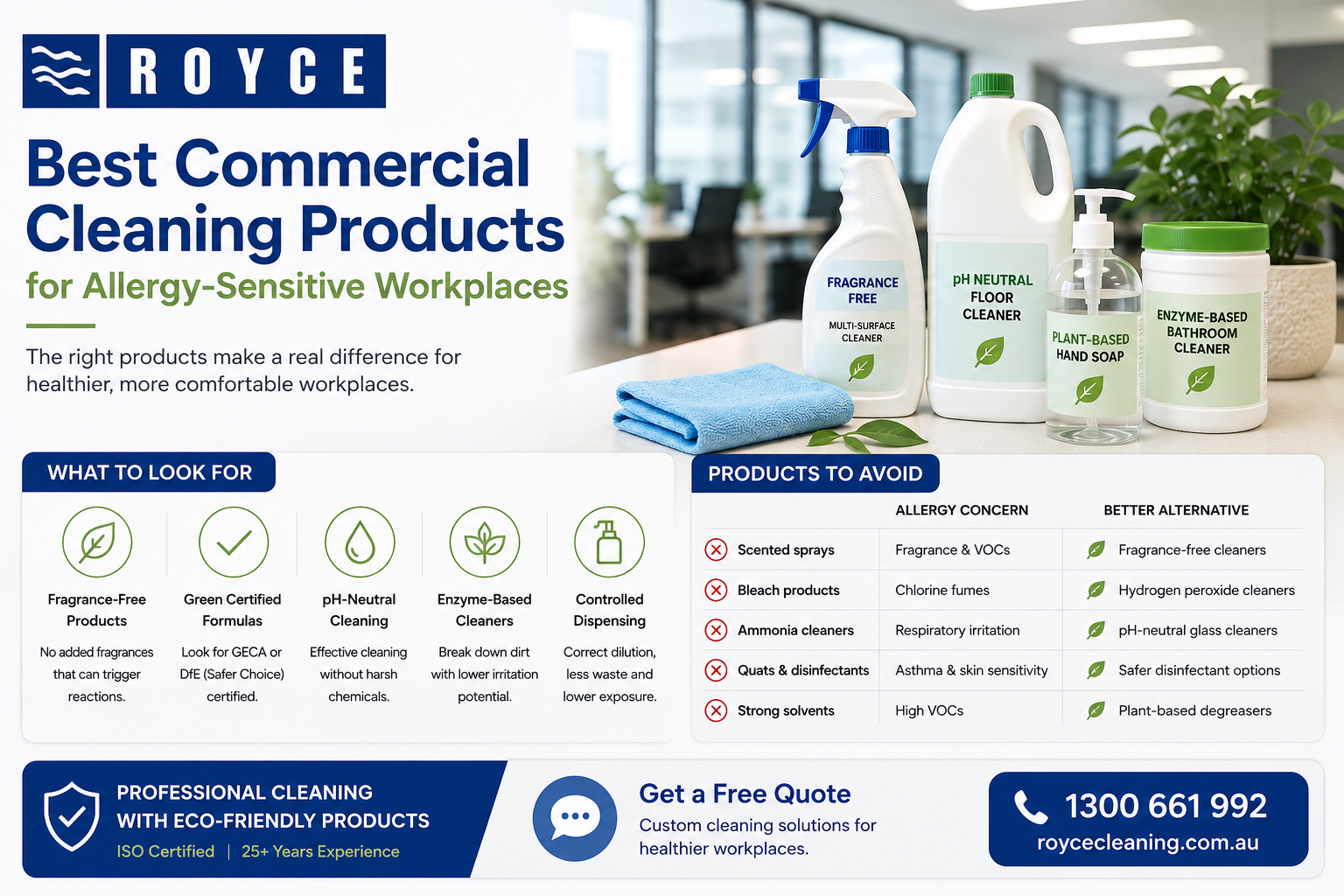
Allergies in the workplace are a genuine and growing concern for Australian employers. What many people don’t realise is that the cleaning products used to make an office look and smell clean can be among the most significant allergy triggers in the building. Fragrances, volatile organic compounds (VOCs), bleach derivatives, and harsh chemical disinfectants can all aggravate respiratory systems, trigger skin reactions, and worsen symptoms for employees with asthma, hay fever, or chemical sensitivities.
Getting the product selection right makes a real difference. Royce Cleaning has provided commercial cleaning services across Sydney since 1996, and eco-friendly cleaning products are a core part of how we approach office cleaning, school cleaning, medical centre cleaning, and more. This guide explains what to look for, what to avoid, and what category of products genuinely works in allergy-sensitive commercial environments.
|
Professional Cleaning with Eco-Friendly Products Royce Cleaning uses environmentally sound commercial cleaning products across all Sydney services. ISO certified. 25+ years experience. |
Why Cleaning Products Are a Major Allergy Trigger
Indoor air quality in commercial buildings is frequently worse than outdoor air quality, partly because HVAC systems recirculate air and partly because chemical residues from cleaning products off-gas into enclosed spaces. The problem is compounded when cleaning happens overnight and products are still active or airing when staff arrive in the morning.
The most common allergy-triggering components in commercial cleaning products are:
- Synthetic fragrances: used in surface sprays, floor cleaners, air fresheners, and bathroom products. Fragrance formulations can contain dozens of individual compounds, including known allergens and VOCs. Even products labelled ‘fresh’ or ‘clean-scented’ can trigger respiratory and skin reactions in sensitive individuals
- Ammonia: found in many glass cleaners and multi-surface sprays. Highly irritating to the respiratory tract at concentrations that are not always detectable by smell
- Quaternary ammonium compounds (quats): widely used disinfectants found in sanitising wipes, surface disinfectants, and bathroom cleaners. Associated with occupational asthma in cleaning workers and can cause skin sensitisation
- Bleach (sodium hypochlorite): effective disinfectant but releases chlorine gas when used in enclosed spaces or mixed with other cleaning agents. Significant respiratory irritant, particularly for people with asthma
- Formaldehyde-releasing preservatives: used in some cleaning concentrates and fabric sprays. A known respiratory sensitiser
- Strong solvents: used in degreasers and heavy-duty floor cleaners. High VOC output in enclosed spaces can trigger headaches, dizziness, and respiratory irritation even in people without diagnosed allergies
What to Look for in Allergy-Friendly Commercial Products
Identifying genuinely allergy-appropriate products requires looking past marketing language and examining what is actually in the formulation. Key indicators:
Fragrance-free, not ‘unscented’
There is an important difference between fragrance-free and unscented. ‘Unscented’ products may contain masking fragrances to neutralise chemical odours, meaning they still contain fragrance compounds. True fragrance-free products contain no added fragrance ingredients at all. For allergy-sensitive workplaces, fragrance-free is the appropriate standard.
Green chemistry certification
Products certified under recognised green chemistry standards, such as Good Environmental Choice Australia (GECA) or Environmental Choice Australia, or meeting standards such as DfE (Safer Choice) from the US Environmental Protection Agency, have been independently assessed for both environmental impact and human health implications. These certifications are a reliable shorthand for products that exclude the most problematic chemical categories.
pH-neutral formulations
Many high-grade commercial cleaners achieve effective cleaning at near-neutral pH levels (roughly 6 to 8) rather than relying on high alkalinity or high acidity to do the work. pH-neutral products are generally gentler on surfaces, less likely to leave reactive residues, and less irritating to skin and airways.
Enzyme-based cleaners
Enzyme-based cleaning products use biological enzymes to break down organic soils, grease, and odour-causing bacteria. They are highly effective, require less chemical concentration to achieve their purpose, and produce significantly lower VOC output than conventional chemical cleaners. They are particularly suited to bathroom, kitchen, and food-area cleaning in commercial environments.
Dilution-controlled dispensing systems
One underappreciated source of chemical sensitivity in workplaces is over-application of cleaning products. Commercial facilities that use wall-mounted dilution control systems, where concentrated product is dispensed at the correct ratio, avoid both product waste and the higher chemical exposure that comes from cleaners using too much product. Proper dilution also reduces residue on surfaces.
| 💡 Ask your cleaning provider: When engaging or reviewing a commercial cleaning provider, ask specifically which products they use, whether they are fragrance-free, and whether the products hold any green chemistry certification. A provider committed to allergy-appropriate cleaning should be able to answer these questions clearly. |
Products to Avoid in Allergy-Sensitive Commercial Settings
Beyond understanding what to select, knowing what to avoid is equally important. In allergy-sensitive workplaces, the following product categories deserve specific caution:
| Product type | Allergy concern | Recommended alternative |
| Scented surface sprays | Fragrance compounds and VOCs | Fragrance-free pH-neutral multi-surface cleaner |
| Bleach-based bathroom products | Chlorine gas irritation; respiratory risk | Enzyme-based bathroom cleaner or quat-free disinfectant |
| Spray glass cleaners with ammonia | Ammonia vapour irritation | Alcohol-based glass cleaner, fragrance-free |
| Scented floor cleaners | Fragrance VOCs spread across entire floor area | pH-neutral fragrance-free floor cleaner |
| Air freshener sprays | Concentrated fragrance compounds | Improved ventilation and odour-neutralising enzyme products |
| Strong degreasers | High solvent load and VOC emission | Citrus-based or enzyme-based degreaser |
Note: product formulations change. Always verify current ingredients against the Safety Data Sheet (SDS) for any commercial product you are evaluating.
High-Priority Surfaces in Allergy-Sensitive Cleaning
In an allergy-sensitive workplace, the cleaning protocol matters as much as the product. Certain surfaces and areas demand particular attention because they accumulate the allergens that affect occupants most directly:
- Carpets and upholstered furniture: dust mites, pet dander, and pollen accumulate in carpet fibres. Regular professional carpet cleaning using low-moisture methods and fragrance-free products removes allergen loads that routine vacuuming cannot address
- HVAC supply and return vents: vents accumulate dust and distribute allergens through recirculated air. Regular cleaning of accessible vent covers reduces this distribution significantly
- Hard floor surfaces: smooth floors do not trap allergens as carpets do, but they allow dust and particles to become airborne during foot traffic. Damp mopping with a fragrance-free product is more effective than dry sweeping, which disturbs settled particles
- Bathroom surfaces: mould spores are significant respiratory allergens. Bathroom cleaning protocols that prevent mould formation, using appropriate non-bleach anti-mould products, reduce ongoing spore load in the facility
- Kitchen and breakroom surfaces: food residues support mould growth and attract pests. Enzyme-based cleaning in these areas controls both organic residue and associated allergen sources
| 📋 Medical and childcare settings: High-sensitivity environments including medical centres and childcare facilities typically require documented cleaning protocols and product lists that meet specific regulatory standards. Royce Cleaning’s medical centre cleaning service is tailored to these elevated requirements. |
|
Allergy-Aware Commercial Cleaning in Sydney Royce Cleaning uses eco-friendly, professionally selected products across all commercial cleaning services. ISO certified. 25+ years experience. |
Frequently Asked Questions
Do commercial cleaning products need to be registered in Australia?
Cleaning products used in commercial settings are subject to Australian chemical safety legislation including the Industrial Chemicals Act 2019, administered by AICIS (Australian Industrial Chemicals Introduction Scheme). Commercial disinfectants that make antimicrobial claims may also require registration with the APVMA. Professional commercial cleaning providers should use products that comply with relevant Australian standards and hold applicable certifications.
How do I know if cleaning products are triggering allergies in my workplace?
Common indicators include employees reporting headaches, eye or throat irritation, or worsened respiratory symptoms on workdays compared to weekends or working from home periods. If symptoms improve when the person is away from the office for several days and return when they are back, chemical sensitivity to products used in the environment is a plausible contributor worth investigating.
Can a commercial cleaner accommodate specific product requirements for our team?
Yes. Royce Cleaning works with clients to accommodate specific cleaning product requirements, including fragrance-free and allergy-appropriate products. Discuss your requirements at the quoting stage so they can be confirmed in the service agreement. Contact Royce Cleaning via the contact page to discuss your specific workplace needs.