
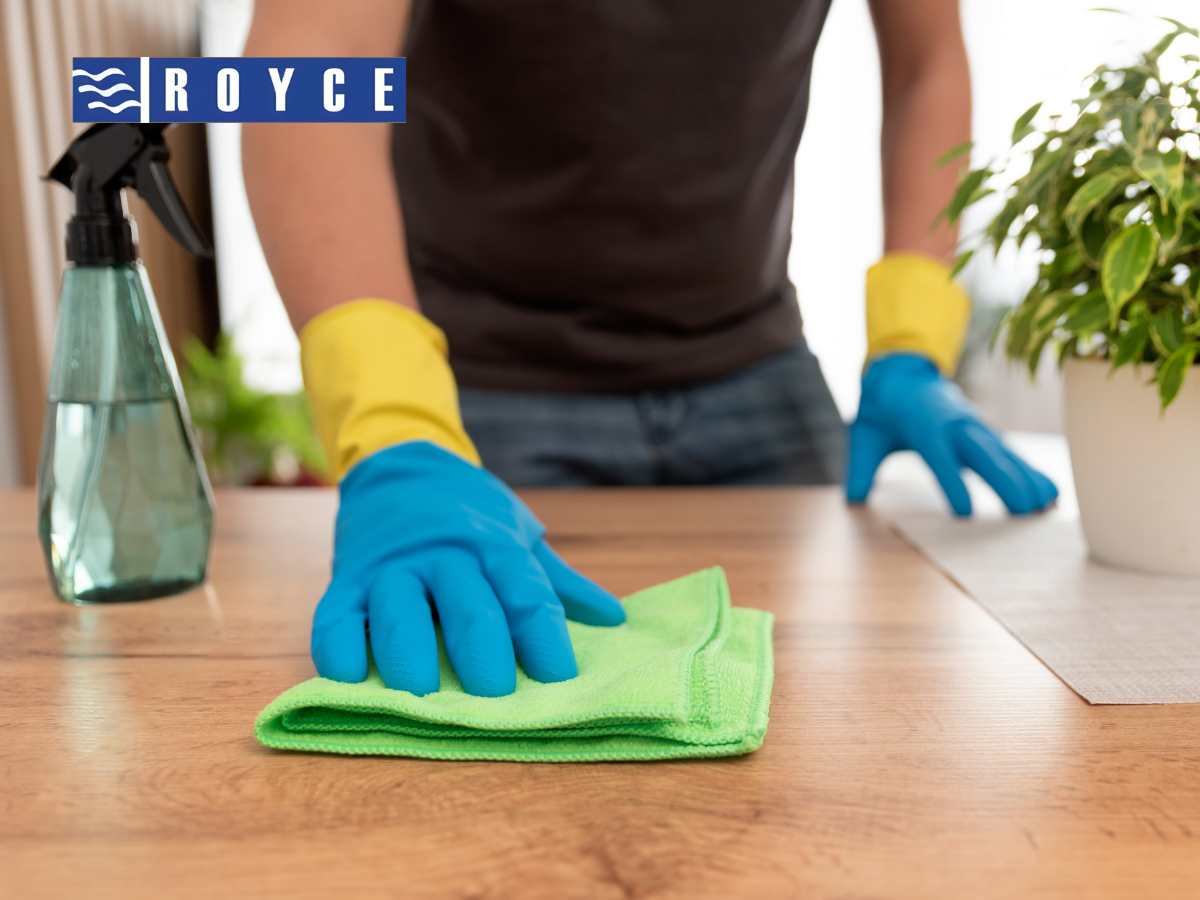
A lot of businesses have adopted green cleaning as a sustainability initiative and left it at that — a policy document, a tick in the ESG column, and not much else. That’s a missed opportunity.
The shift to eco-friendly commercial cleaning, done properly, has a measurable effect on brand reputation, staff retention, client trust, and regulatory readiness. This article looks at each of those benefits in practical terms — and what it takes to make them real rather than cosmetic.
|
Eco-Friendly Commercial Cleaning in Sydney Royce Cleaning has provided quality, environmentally responsible cleaning services across NSW since 1996. |
The Reputation Shift Already Happening
Australian businesses are under increasing pressure from multiple directions — clients asking about sustainability credentials, staff expecting employers to reflect their values, and procurement bodies adding environmental criteria to supplier assessments.
In this environment, what you do — not just what you say — determines how your brand is perceived. A business that operates with eco-friendly cleaning practices, documented waste management, and a genuine environmental policy has something tangible to point to. One that claims sustainability credentials without operational substance is increasingly exposed.
Benefit 1: Client and Stakeholder Confidence
For businesses that operate in sectors where environmental performance matters — construction, education, healthcare, professional services — demonstrating responsible practices across all operations, including cleaning, builds credibility with clients.
Schools that can point to eco-friendly school cleaning practices demonstrate duty of care to parents and the community. Commercial landlords and strata managers who use green cleaning providers can include this in building management communications to tenants. These are not abstract reputational benefits — they’re concrete points of differentiation.
In a tender or procurement context, documented environmental practices increasingly carry weight. Having a verified green cleaning programme in place is a straightforward way to satisfy sustainability criteria without significant additional cost.
Benefit 2: Staff Wellbeing and Retention
The link between chemical cleaning products and indoor air quality is well-established. Conventional cleaning chemicals can release volatile organic compounds (VOCs) into the air — compounds associated with headaches, respiratory irritation, and longer-term health concerns with repeated exposure.
Switching to low-VOC, biodegradable cleaning products — as used in Royce Cleaning’s office cleaning service — reduces staff exposure to these compounds and improves indoor air quality. The practical results are fewer complaints from staff about cleaning smells, fewer respiratory issues, and a working environment that staff are more comfortable in.
Separately, staff increasingly want to work for organisations whose values align with their own. For many employees, particularly younger workers, environmental responsibility is a factor in how they assess employers. A workplace that demonstrably operates sustainably — in cleaning as in other areas — contributes to a culture that supports retention.
Benefit 3: Alignment with ESG and Sustainability Reporting
For medium and large businesses, environmental, social, and governance (ESG) reporting is becoming a standard expectation. Investors, lenders, and major clients are increasingly asking for documented evidence of environmental performance across operations.
Cleaning and facilities management sit within the operational scope of most ESG frameworks. Having a documented green cleaning programme — with evidence of product choices, waste diversion rates, and environmental policy — provides verifiable data to include in ESG reporting. This is not a trivial benefit for businesses seeking to access ESG-linked financing or comply with procurement requirements.
Benefit 4: Reduced Regulatory Risk
NSW environmental regulations around waste disposal, chemical handling, and workplace chemical exposure are tightening. Businesses that are already operating to higher environmental standards are less exposed to regulatory risk as these standards increase. A waste removal programme that correctly handles e-waste, hazardous materials, and recyclables — rather than mixing everything to landfill — keeps businesses on the right side of current and anticipated regulations.
Benefit 5: Cost Efficiency Over Time
This benefit is often overlooked in the reputation conversation, but it matters. Green cleaning programmes that use concentrated products, reusable equipment, and smart waste segregation typically cost less to operate over time than conventional alternatives.
- Concentrated products reduce packaging and transport costs
- Reusable microfibre cloths cost less over time than disposables
- Waste diversion from recycling streams reduces landfill levy charges
- Reduced cleaning frequency where appropriate saves labour and product cost
For businesses managing cleaning across multiple sites — offices, strata, schools — the cumulative saving from these efficiencies is meaningful.
How to Make Green Cleaning a Genuine Brand Asset
The difference between green cleaning as a tick-box exercise and green cleaning as a genuine brand asset comes down to verification and communication.
Document What You’re Doing
Keep records of the products you use, their certifications, your waste diversion rates, and your cleaning programme’s scope. Without documentation, sustainability claims are hard to verify and easy to dismiss.
Choose a Provider Who Can Evidence Their Practices
If you’re outsourcing your cleaning, ask your provider for their environmental policy, product specifications, and waste management approach. At Royce Cleaning, we’ve held ISO 9001 quality certification since 1996. Contact us to discuss how our services support your sustainability goals.
Communicate It Appropriately
Include your green cleaning credentials in relevant client communications, on your website, and in procurement responses. Don’t overstate — make specific, verifiable claims rather than vague assertions about being ‘eco-friendly’.
Extend It Across All Sites
If you operate across multiple premises — offices, strata buildings, warehouses — apply consistent standards across all of them. Inconsistency in environmental practices undermines the credibility of the whole programme. Royce Cleaning’s strata cleaning and office cleaning services apply consistent environmental standards across every site we manage.
Green Cleaning vs Conventional Cleaning: Brand Impact Comparison
| Factor | Conventional Cleaning |
Green Cleaning |
| Client perception | Neutral | Positive — sustainability credential |
| Staff indoor air quality | Can be poor (VOC exposure) | Improved (low-VOC products) |
| ESG reporting | Limited contribution | Documented environmental performance |
| Regulatory risk | Higher as standards tighten | Lower — already compliant |
| Ongoing cost | Stable or rising (levy increases) | Typically reduces over time |
| Procurement advantage | None | Increasingly required by buyers |
|
Make Green Cleaning Part of Your Brand Talk to Royce Cleaning about a sustainable commercial cleaning programme tailored to your Sydney business. |
Frequently Asked Questions
Does green cleaning actually improve indoor air quality?
Yes. Low-VOC, biodegradable cleaning products reduce airborne chemical compounds compared to conventional alternatives. For staff who work in cleaned spaces regularly — particularly in sealed, air-conditioned environments — the difference is measurable in fewer respiratory complaints and improved comfort.
Can green cleaning help with ESG reporting?
Yes. A documented green cleaning programme — covering product certifications, waste diversion rates, and environmental policy — provides verifiable data for operational ESG metrics. This is increasingly relevant for businesses subject to ESG scrutiny from investors, lenders, and major clients.
Will clients actually notice or care about green cleaning?
Increasingly, yes — particularly in sectors with strong sustainability expectations. Even where clients don’t actively ask, demonstrating responsible operational practices builds credibility and trust. In procurement and tender contexts, environmental credentials are a growing requirement.
Is green cleaning suitable for all commercial environments?
Yes. Eco-friendly cleaning products are available for all commercial environments, including high-hygiene settings such as medical facilities and schools. The key is selecting the right product for each application rather than applying a one-size-fits-all approach.
How do I make sure my cleaning provider is genuinely eco-friendly?
Ask for documentation: product names and certifications, waste management procedures, and any environmental policy they operate under. A provider that can’t produce these is unlikely to be operating to a standard that will hold up to scrutiny.
Does green cleaning cost more than conventional cleaning?
Not necessarily — and in many cases it costs less over time. Concentrated products, reusable equipment, and waste diversion savings typically make a well-designed green cleaning programme cost-neutral or lower cost than a conventional alternative within 12–18 months.