
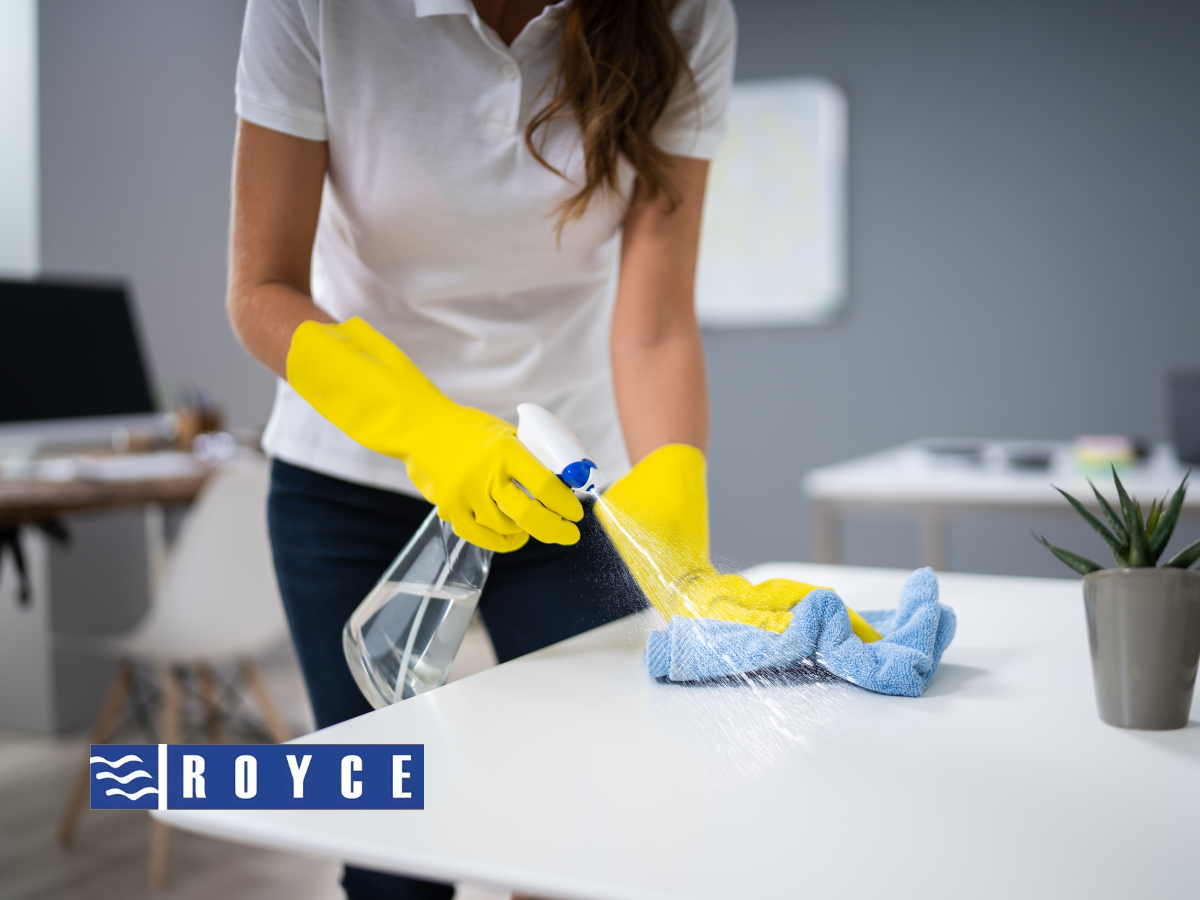
Most businesses know they should be cleaning more sustainably. Fewer know exactly where to start. The good news is that building a greener cleaning routine doesn’t require an overhaul of everything you do — it requires a smarter approach to what you’re already doing.
At Royce Cleaning, we’ve been providing commercial cleaning services across Sydney since 1996. Over that time, we’ve seen a genuine shift in what clients expect — and in what the best cleaning practice actually looks like. Sustainable cleaning isn’t a trend. It’s the direction the industry is heading, and the businesses that adapt early are already seeing the benefits.
|
Interested in Eco-Friendly Commercial Cleaning? Royce Cleaning uses environmentally responsible products and methods across all our Sydney services. |
What Does a Green Cleaning Routine Actually Mean?
A green cleaning routine is one that reduces the environmental and health impact of your cleaning programme without compromising cleanliness standards. In practice, this means:
- Using products that are biodegradable and free from harsh synthetic chemicals
- Reducing water and energy consumption during cleaning
- Managing waste streams so that less goes to landfill
- Choosing equipment and methods that are more efficient
This isn’t about doing less cleaning. It’s about doing it with less environmental cost.
Step 1: Audit Your Current Products
The first thing to look at is what’s in your cleaning cupboard. Many commercial cleaning products contain volatile organic compounds (VOCs), phosphates, and synthetic fragrances that can irritate staff, contaminate water systems, and persist in the environment long after they’ve done their job.
Look for products that carry recognised eco-certifications — in Australia, the Good Environmental Choice Australia (GECA) certification is a reliable signal that a product meets environmental standards. Fragrance-free, phosphate-free, and biodegradable formulations are widely available at comparable price points.
Our office cleaning services in Sydney already use environmentally friendly disinfectants as standard — so if you’re outsourcing your cleaning, it’s worth asking your provider what’s actually in the products they’re using.
Step 2: Reduce Single-Use Plastic
A lot of cleaning programmes generate significant plastic waste through disposable cloths, single-use spray bottles, and oversized packaging. Switching to reusable microfibre cloths, concentrated refillable products, and bulk containers is one of the more straightforward changes a business can make — and it typically reduces product costs over time as well.
Microfibre cloths, in particular, clean effectively with water alone in many applications, reducing the need for chemical products entirely. They’re washable, durable, and significantly reduce waste compared to disposable alternatives.
Step 3: Rethink Your Waste Streams
Green cleaning doesn’t stop at what products you use — it extends to what happens to waste once cleaning is done. A proper waste segregation system separates general waste, recyclables, e-waste, and hazardous materials so that each goes through the right disposal channel. Royce Cleaning’s commercial waste removal service includes waste auditing, recycling stream setup, and regular collection — helping Sydney businesses reduce landfill contributions and lower their overall waste charges.
Step 4: Use Water More Efficiently
Water use in commercial cleaning is often higher than it needs to be. Steam cleaning, for example, uses significantly less water than traditional mopping while achieving higher temperatures that kill bacteria and remove grime more effectively. Trigger-spray bottles reduce overuse of both water and chemical product compared to open-pour methods.
For larger facilities — warehouses, schools, industrial sites — a water audit as part of your cleaning plan can identify where the biggest savings are. Our warehouse cleaning and school cleaning services are designed to account for the specific layout and usage patterns of each site, which helps to avoid waste.
Step 5: Train Your Team
The most eco-friendly products in the world don’t help if your team doesn’t know how to use them correctly. Proper dilution ratios, dwell times, and application methods all affect how effective — and how wasteful — a cleaning product is.
If you’re managing an in-house cleaning team, invest in regular training on product usage, waste segregation, and water efficiency. If you’re working with a commercial cleaning provider, ask what training they provide to their staff on sustainable practices.
Common Mistakes in Commercial Green Cleaning
| Mistake | Why It’s a Problem |
Better Approach |
| Buying ‘green-labelled’ products without checking certifications | Marketing claims don’t always reflect environmental performance | Look for GECA or equivalent third-party certification |
| Ignoring waste segregation | Mixed waste streams end up in landfill unnecessarily | Set up labelled bins for general, recycling, and e-waste |
| Overusing product to compensate for poor technique | More product doesn’t mean better cleaning | Train staff on correct dilution and dwell times |
| Using disposable cloths and mop heads | High waste generation and ongoing cost | Switch to reusable microfibre across all areas |
| Not reviewing the cleaning schedule | Cleaning too frequently wastes resources | Audit frequency and adjust to actual usage patterns |
What to Look for in a Green Commercial Cleaning Provider
If you’re outsourcing your cleaning, the environmental performance of your provider matters. Here are the questions worth asking:
- Do they use certified eco-friendly cleaning products?
- Do they have documented waste management processes?
- Can they provide a waste audit and recommend improvements?
- Do they use water-efficient methods such as steam cleaning?
- Are their staff trained on sustainable cleaning practices?
Royce Cleaning has held ISO 9001 quality certification since 1996 and operates across offices, schools, warehouses, and industrial sites throughout Sydney. Get in touch to discuss how we can support your sustainability goals.
|
Get a Green Cleaning Assessment Talk to our team about auditing your current cleaning programme and moving to a more sustainable approach. |
Frequently Asked Questions
Are eco-friendly cleaning products as effective as conventional ones?
Yes — when used correctly. The main difference is in formulation, not performance. Certified green products are tested against the same hygiene standards as conventional alternatives. Proper technique and dwell time matter more than chemical strength in most cleaning applications.
Does green cleaning cost more?
Not necessarily. Concentrated products, reusable cloths, and reduced water usage can all lower overall cleaning costs. There may be a transition cost to update supplies, but most businesses find the ongoing costs are comparable or lower.
Do I need to change my entire cleaning schedule to go green?
No. You can make incremental changes — starting with product substitutions and waste segregation — without overhauling your cleaning programme. A good commercial cleaning provider can help you identify the highest-impact changes to make first.
What certifications should I look for on green cleaning products in Australia?
Good Environmental Choice Australia (GECA) is the most widely recognised certification in Australia. Products carrying the GECA mark have been independently assessed for environmental and health criteria.
How do I set up a waste segregation system in my commercial premises?
You need clearly labelled stations for general waste, mixed recycling, cardboard, and any site-specific streams (such as e-waste or hazardous materials). Royce Cleaning’s commercial waste removal service includes advice on setting up the right system for your site.
Is steam cleaning better for the environment than traditional mopping?
Generally, yes. Steam cleaning uses less water, requires no chemical product in most applications, and achieves higher temperatures that kill bacteria more effectively. It’s particularly well-suited to hard floors, grout, and high-touch surfaces in commercial settings.