
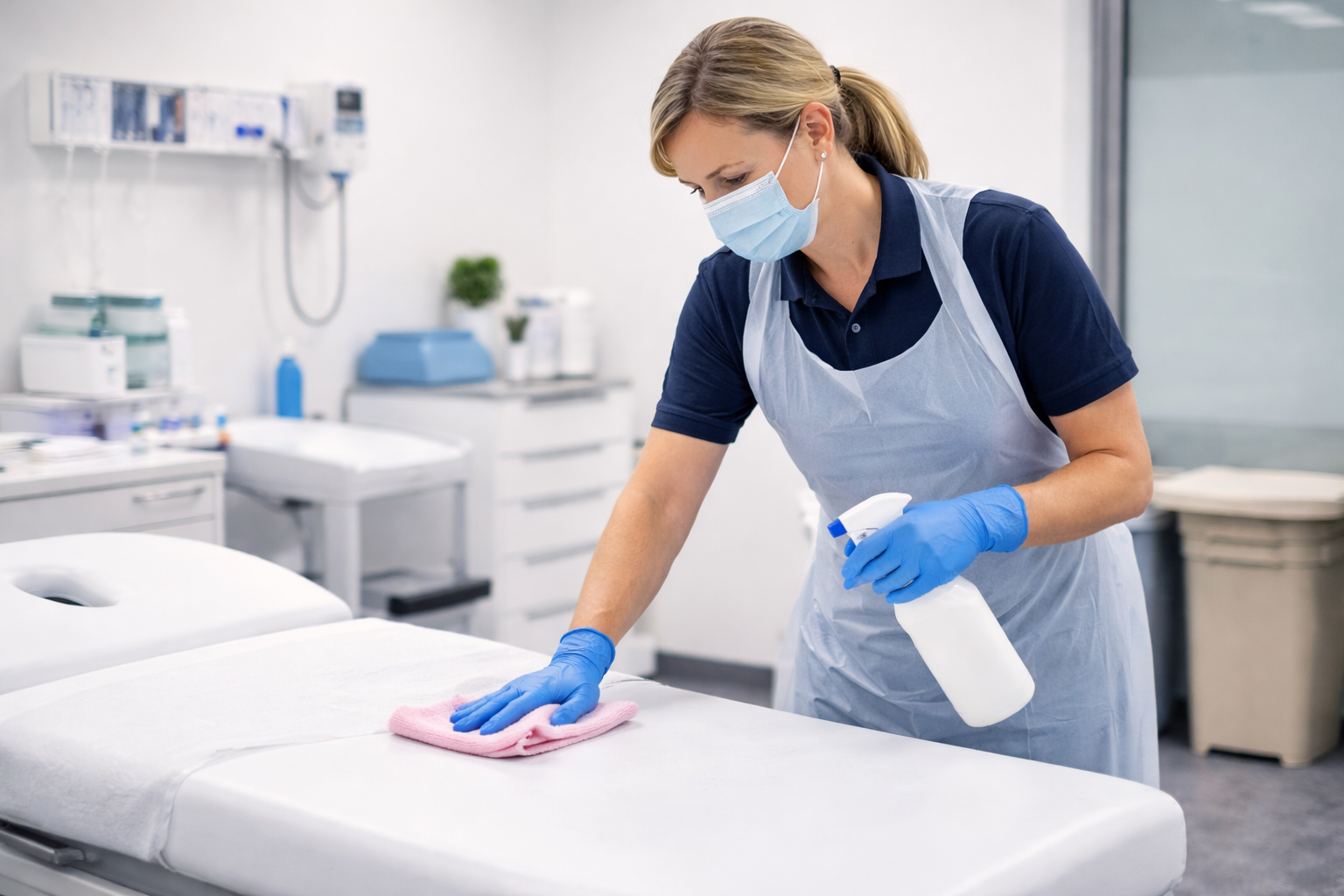
Maintaining cleaning compliance in a medical centre is not just about presentation — it is a regulatory and patient safety requirement.
In Australia, medical facilities must follow strict infection control, hygiene and workplace safety standards. Cleaning procedures must reduce the risk of cross-contamination, manage biohazards correctly, and comply with Work Health and Safety (WHS) obligations.
If you operate a GP clinic, specialist practice, dental clinic or allied health centre, your cleaning systems must meet higher standards than general commercial offices.
This guide explains what compliance involves, what inspectors expect, and how structured commercial cleaning services can support medical facilities.
Why Medical Cleaning Compliance Is Different
Medical centres treat vulnerable people. This increases the risk profile significantly.
Cleaning in healthcare settings must:
- Minimise infection transmission
- Follow documented infection control procedures
- Use appropriate disinfectants
- Prevent cross-contamination
- Manage clinical waste correctly
Unlike standard office cleaning, medical cleaning requires trained staff who understand infection control principles.
Key Compliance Frameworks in Australia
Medical cleaning compliance is influenced by:
- Work Health and Safety (WHS) legislation
- Infection prevention and control guidelines
- Industry best-practice standards
- State-based health department regulations
While specific requirements vary, the expectation is consistent: documented, systematic cleaning procedures.
Professional office cleaning services adapted for medical environments must operate at a higher infection-control standard.
What Health Inspectors Look For in Medical Centres
- High-Touch Surface Cleaning
Inspectors expect frequent disinfection of:
- Door handles
- Reception counters
- EFTPOS machines
- Waiting room seating
- Treatment beds
- Light switches
Touchpoints must be cleaned using approved disinfectants with correct dwell times.
- Treatment Room Protocols
Treatment rooms require:
- Between-patient cleaning procedures
- Surface disinfection
- Proper handling of reusable equipment
- Documented cleaning logs
Failure to maintain strict cleaning between appointments is a major compliance risk.
- Bathroom & Patient Amenities
Medical centre bathrooms must be:
- Sanitised frequently
- Well-stocked
- Free from contamination risks
- Maintained to hospital-grade hygiene expectations
These areas are often closely reviewed during inspections.
- Waste & Biohazard Management
Medical facilities must correctly manage:
- Clinical waste
- Sharps containers
- Contaminated materials
- Safe waste storage
Waste areas must be clean, secure and compliant with disposal regulations.
- Chemical Storage & Safety
Cleaning products must be:
- Stored securely
- Clearly labelled
- Supported by accessible Safety Data Sheets (SDS)
- Used according to manufacturer guidelines
Improper chemical handling can result in WHS breaches.
Essential Components of a Compliant Medical Cleaning Plan
A compliant medical centre cleaning system should include:
Documented Cleaning Schedules
- Daily cleaning tasks
- Between-patient procedures
- Weekly deep-clean items
- Monthly maintenance checks
Documentation demonstrates proactive management.
Colour-Coded Cleaning Systems
Colour-coded cloths and mops reduce cross-contamination by separating:
- Bathroom cleaning equipment
- Treatment room equipment
- General surface cleaning materials
This is considered best practice in medical environments.
Trained Cleaning Staff
Medical cleaning requires cleaners trained in:
- Infection control
- PPE use
- Cross-contamination prevention
- Safe chemical handling
Engaging an experienced provider ensures these protocols are followed consistently.
If you are unsure whether your medical centre meets compliance expectations, you can request guidance through the Royce Cleaning Contact Page.
Common Compliance Risks in Medical Centres
Medical facilities often fail compliance due to:
- Inconsistent cleaning routines
- Lack of documentation
- Incorrect disinfectant use
- Poor waste management
- Dust build-up in low-visibility areas
- Inadequate between-patient cleaning
Most of these risks are preventable with structured cleaning processes.
How Professional Cleaning Supports Compliance
Partnering with a specialist commercial cleaning provider offers:
- Structured cleaning schedules
- Infection-control-focused procedures
- Proper documentation and reporting
- Trained and insured staff
- Consistent quality control checks
Compliance is easier to maintain when cleaning systems are proactive rather than reactive.
Preparing for a Medical Centre Inspection
Before an inspection:
- Review your cleaning logs
- Conduct an internal walkthrough
- Check high-touch areas
- Confirm chemical storage compliance
- Ensure waste areas are secure and clean
- Verify between-patient cleaning procedures are documented
Small oversights can create major compliance concerns.
Final Thoughts
Cleaning compliance in medical centre facilities is not optional — it is essential for patient safety, regulatory compliance and professional standards.
Medical cleaning must be:
- Structured
- Documented
- Infection-control focused
- Conducted by trained professionals
If your current cleaning arrangements do not include documented procedures and infection-control safeguards, reviewing your processes now can help prevent future compliance issues.