
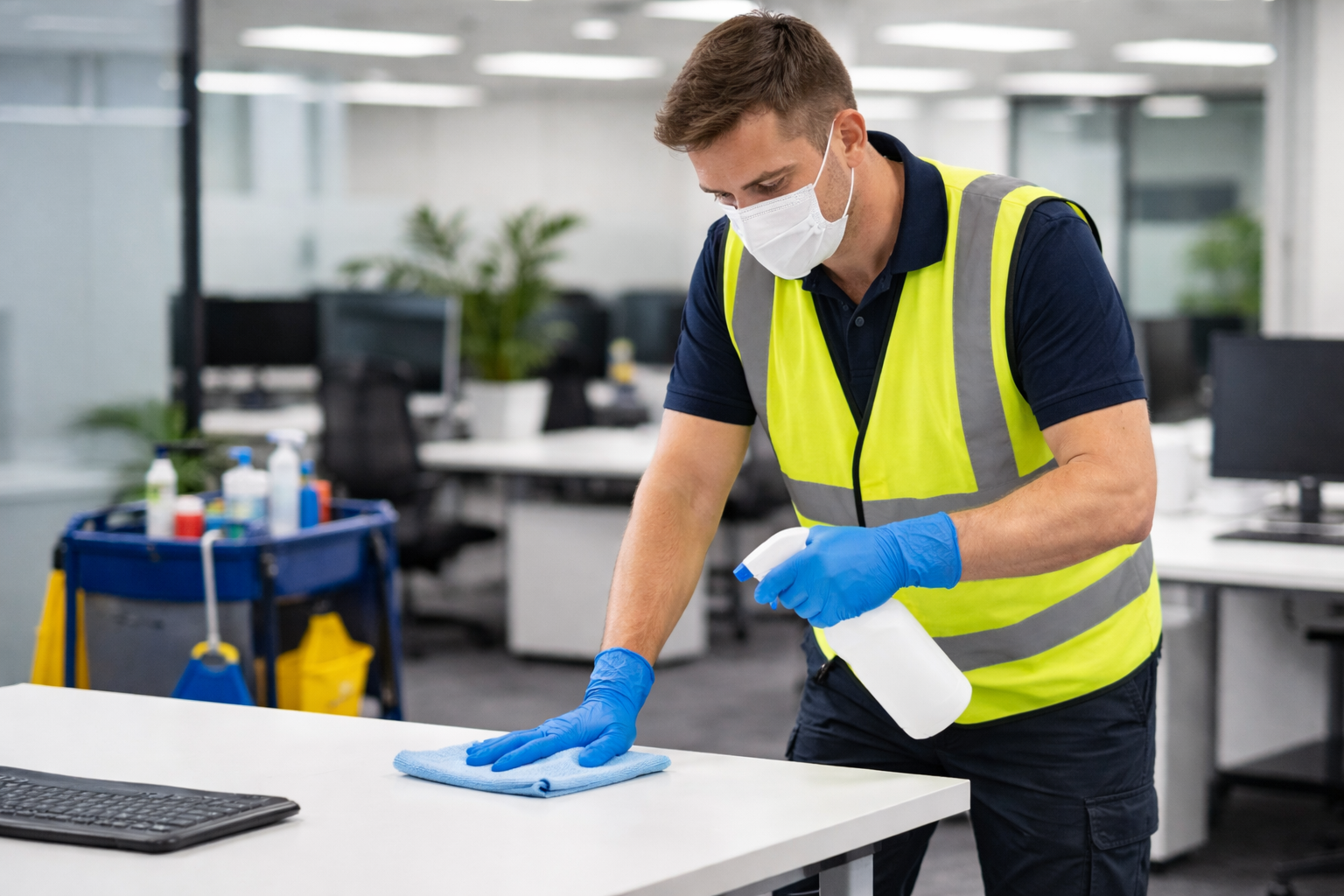
Maintaining a clean workplace in Australia is not just about appearance — it is about compliance, safety, and protecting the health of your staff and visitors.
Australian workplace cleaning standards are shaped by Work Health and Safety (WHS) legislation, Safe Work Australia guidance, and industry-specific regulatory requirements. Whether you manage an office, medical facility, industrial site or retail space, understanding these standards helps reduce risk and ensure you meet your legal obligations.
If you engage a professional provider such as Royce Cleaning Services, your cleaning plan should align with these national requirements.
Why Workplace Cleaning Standards Matter
Under Australian WHS laws, employers must provide a work environment that is safe and without risks to health, so far as is reasonably practicable.
In practical terms, this means your workplace must be:
- Free from slip and trip hazards
- Hygienic and properly sanitised
- Managed to reduce exposure to harmful substances
- Maintained to prevent infection risks
Workplace cleaning is a core part of meeting these obligations.
Businesses that invest in structured, professional commercial cleaning services are far more likely to remain compliant and reduce liability risks.
- Work Health and Safety (WHS) Compliance
WHS regulations require businesses to identify hazards and implement control measures. Cleaning plays a direct role in this process.
Examples of cleaning-related WHS responsibilities include:
- Immediate removal of spills
- Maintaining clean, dry floors
- Safe disposal of waste
- Managing dust build-up
- Ensuring bathrooms and kitchens meet hygiene standards
Failure to maintain these standards can result in workplace injuries and potential penalties.
- Safe Work Australia Guidelines
Safe Work Australia provides national guidance around managing biological hazards and infection risks.
In office environments, this includes:
- Regular disinfecting of high-touch surfaces
- Cleaning shared workstations
- Sanitising kitchens and breakout areas
- Maintaining adequate ventilation
Professional office cleaning services should follow structured cleaning schedules that prioritise high-contact points.
- Infection Control Standards
Infection control is now a permanent expectation across Australian workplaces.
Best-practice cleaning includes:
- Use of approved disinfectants
- Observing correct chemical dwell times
- Wearing appropriate PPE
- Preventing cross-contamination
- Maintaining documented cleaning records
In higher-risk environments such as medical facilities, stricter procedures apply, often requiring hospital-grade disinfectants and colour-coded systems.
- Industry-Specific Cleaning Standards
Workplace cleaning standards vary depending on the industry.
Offices
Offices typically require:
- Daily rubbish removal
- Surface disinfecting
- Bathroom sanitation
- Carpet vacuuming
- Hard floor mopping
The goal is maintaining hygiene, safety, and a professional presentation.
Medical & Healthcare Facilities
Healthcare cleaning must follow strict infection prevention protocols, including:
- Hospital-grade disinfectants
- Detailed cleaning logs
- Biohazard waste handling
- Surface-by-surface disinfection
- Cross-contamination prevention
These environments require specialist knowledge and trained cleaning professionals.
Industrial & Warehouse Sites
Industrial environments must prioritise:
- Removal of oil and chemical spills
- Dust control (including combustible dust risks)
- Safe machinery cleaning
- Clear emergency exits and walkways
Cleaning in these settings is closely linked to hazard reduction and regulatory compliance.
- Chemical Handling & Australian Standards
Workplaces must ensure:
- Cleaning chemicals are stored safely
- Safety Data Sheets (SDS) are accessible
- Products are correctly labelled
- Staff are trained in chemical handling
Professional cleaning providers should already operate under these compliance frameworks.
- Documentation & Cleaning Schedules
A compliant cleaning system includes:
- Documented cleaning checklists
- Defined cleaning frequencies
- Quality control inspections
- Incident reporting procedures
- Clear scope of work agreements
Reliable providers structure their cleaning plans around compliance and transparency.
If you are unsure whether your current arrangements meet regulatory expectations, you can contact Royce Cleaning directly via their Contact Page to review your current cleaning scope.
- Environmental & Sustainability Considerations
Modern Australian workplaces are increasingly adopting environmentally responsible cleaning practices.
This may include:
- Low-toxicity products
- Microfibre systems
- Waste reduction strategies
- Water-efficient cleaning methods
Sustainable cleaning supports both environmental responsibility and staff wellbeing.
What Happens If Standards Aren’t Met?
Failing to meet workplace cleaning standards can lead to:
- WHS breaches
- Increased injury claims
- Spread of illness
- Staff absenteeism
- Reputational damage
Proactive cleaning reduces both operational and legal risks.
How Often Should a Workplace Be Cleaned?
Cleaning frequency depends on:
- Foot traffic
- Industry risk level
- Number of employees
- Public access
- Type of facility
For example:
- Small offices may require daily cleaning.
- Large commercial buildings may require multiple daily touchpoint cleans.
- Healthcare environments require strict, documented routines.
A site-specific cleaning assessment ensures your cleaning schedule aligns with compliance requirements.
Final Thoughts
Australian workplace cleaning standards exist to protect people — not just to maintain appearance.
Understanding these requirements helps businesses:
- Reduce risk
- Maintain compliance
- Protect staff health
- Create safer, more professional environments
If you are reviewing your workplace cleaning arrangements, partnering with an experienced provider ensures your site aligns with Australian safety and hygiene standards.